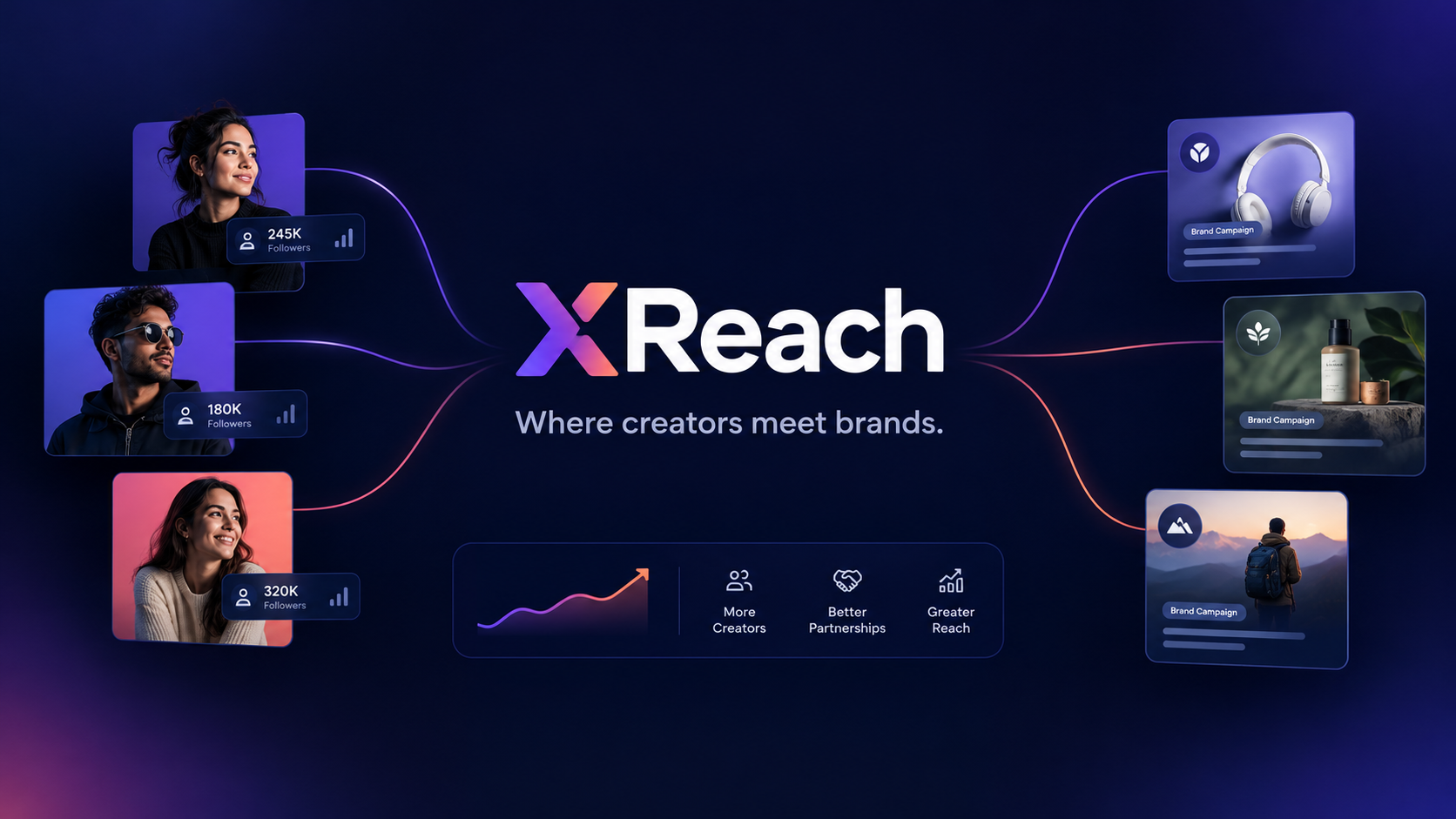
When I started building XReach, I thought the biggest challenge would be building the product. Designing the interface, developing the features, setting up the database, and connecting everything together seemed like the major milestones.
But as I got closer to launch, I realized something: building the product is only one part of building a business.
XReach is a platform designed to connect creators with opportunities to monetize their social media presence. The idea sounds simple, but turning it into a working marketplace has taught me several valuable lessons.
1. A good idea isn't enough; you need to validate it.
It's easy to get excited about an idea when you're the one building it. You can see the potential, imagine the possibilities, and convince yourself that people will use it.
But your enthusiasm doesn't automatically translate into customer demand.
I've learned the importance of talking to potential users, understanding their existing workflows, and asking whether a product actually solves a problem for them. Sometimes, the most valuable feedback isn't about what users want you to build. It's about understanding what they struggle with today.
2. Building a marketplace is harder than building a product.
A traditional SaaS product typically serves a specific customer group. A marketplace has to serve at least two sides.
With XReach, creators need compelling reasons to join, while brands need to see enough value to participate. Neither side has much incentive to join if the other side isn't there.
This creates a familiar chicken-and-egg problem.
I've learned that building the technology is only part of the challenge. Finding the first users, earning their trust, and creating enough value to encourage repeat participation are equally important.
3. The last 10% can take longer than the first 90%.
Getting the core application working feels like a major achievement. But the final stretch introduces a different category of challenges.
Payment integration, authentication, platform restrictions, validation, error handling, and end-to-end testing all demand attention.
A feature might work perfectly in isolation but fail when connected to the rest of the system.
I've learned not to underestimate the final stages of development. A product isn't ready simply because its main features work. It's ready when the complete user journey works reliably.
4. Payments introduce a different level of responsibility.
When a platform connects people and facilitates transactions, payments become much more than a technical integration.
You have to think about payment failures, payouts, refunds, transaction status, reconciliation, and user trust. You also need to understand the payment provider's requirements and ensure the business model fits its rules.
This has been an important lesson while building XReach: handling money requires a different level of care than handling ordinary application data.
Getting the payment flow right is essential to delivering a reliable experience.
5. Distribution is not something you can postpone until launch.
As a developer, it's tempting to spend most of your time building and leave marketing for later.
I've learned that this can be a mistake.
A finished product doesn't automatically attract users. People need to discover it, understand its value, and believe it's worth trying.
Finding early adopters, having meaningful conversations, collecting feedback, and building relationships should happen alongside development.
The challenge is to reach people genuinely interested in the problem you're solving rather than simply chasing sign-ups.
6. Feedback is more valuable before launch than after it.
It's tempting to wait until every feature is complete before showing a product to potential customers.
But early conversations can reveal assumptions that need to be challenged before they become expensive mistakes.
Even when the product isn't fully functional, people can still respond to the concept, explain their current frustrations, and suggest improvements.
I've realized that early feedback isn't just about improving the product. It's about discovering whether I'm solving the right problem in the first place.
7. Building in public requires patience and authenticity.
Sharing progress, discussing challenges, and connecting with people online can help build awareness. But meaningful relationships take time.
People are more likely to engage when conversations feel genuine and relevant to them. Repeatedly promoting a product without understanding the audience can have the opposite effect.
I've learned that building in public isn't simply about announcing what you've built. It's about sharing what you're learning, listening to others, and participating in the community.
8. Shipping is a milestone, not the finish line.
It's easy to think of launch day as the ultimate goal. After months of development, getting the product into users' hands feels like the finish line.
In reality, it's the beginning of a new phase.
Once real users start interacting with the product, you'll discover problems you didn't anticipate, workflows that need improvement, and features that matter more than you expected.
The real test is whether people find enough value to return, recommend the product, and eventually pay for it.
A successful launch is encouraging, but sustained usage is a much stronger signal.
The biggest lesson
Building XReach has changed how I think about product development.
I started with a focus on building features. Now, I'm thinking more about the entire business: the users, the marketplace dynamics, payments, trust, distribution, and long-term sustainability.
I'm still learning, and XReach is still a work in progress. There are challenges to solve before launch, and plenty of questions that only real users can answer.
But that's part of the journey.
The goal isn't just to build something that works. It's to build something people genuinely need, trust, and want to use.
And perhaps that's the most important lesson of all: writing code can bring an idea to life, but understanding people is what gives that idea a chance to become a business.