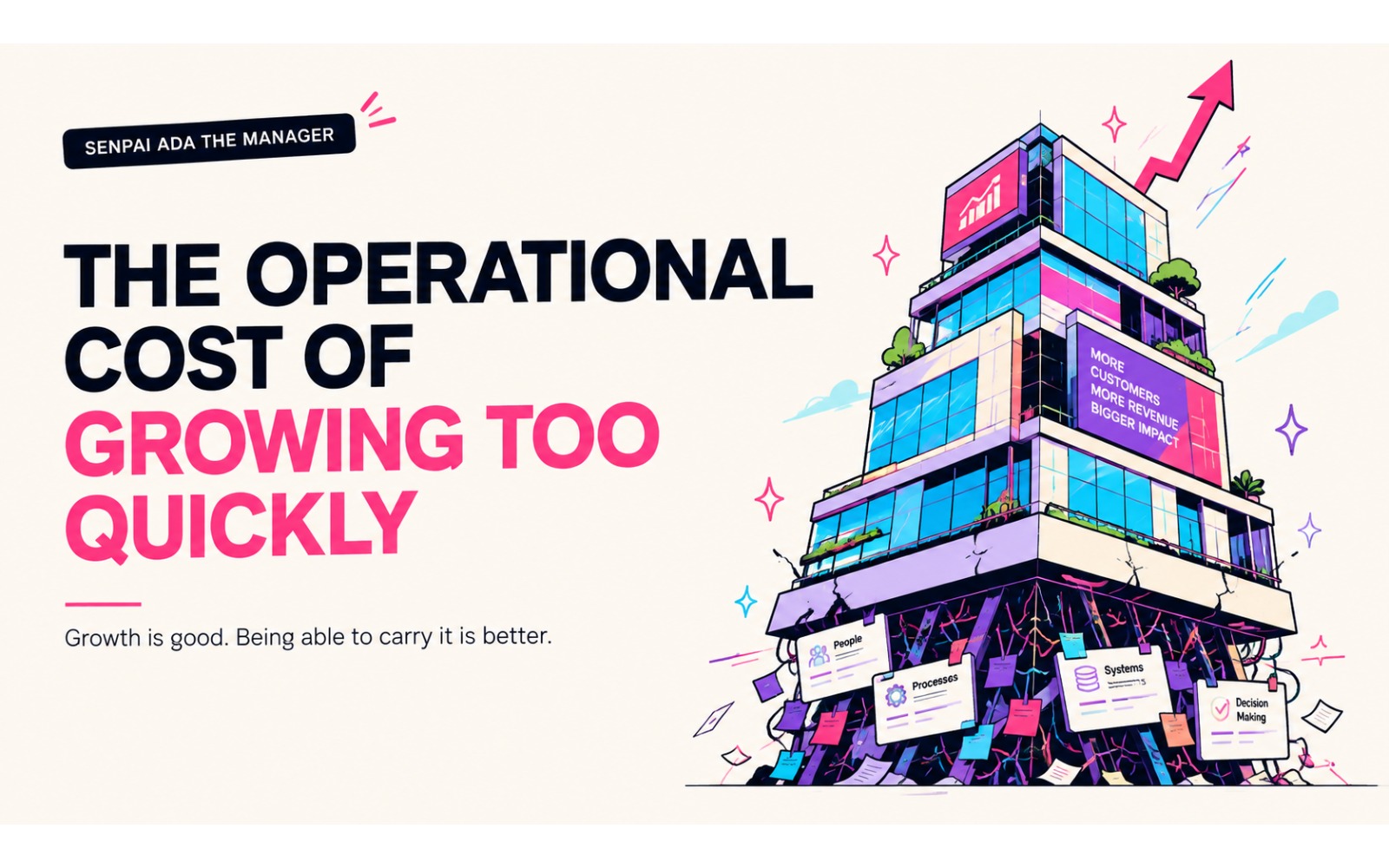

Growth is exciting. More customers, more revenue, and a bigger team all look like signs of success.
But what happens when your operations can't keep up?
Growing too quickly can create problems that aren't immediately visible. Here are five common ones.
1. Growth Hides Problems
Customer complaints pile up, new employees struggle to adapt, and founders become bottlenecks. Everything looks good on paper, but the business becomes harder to manage.
2. Decisions Become Slower
As teams grow, unclear responsibilities lead to unnecessary meetings, delays, and constant requests for approval. Everyone needs to know who owns what.
3. Quality Begins to Drop
When teams rush to ship new features or serve more customers, testing and attention to detail often suffer. Growth means little if customers stop trusting your product.
4. Company Culture Gets Lost
As more people join, the values and behaviours that shaped the early team can fade. Culture doesn't sustain itself; leaders must model it and build it into onboarding and everyday work.
5. Costs Rise Without Better Results
Hiring too quickly and launching too many projects can increase expenses without improving productivity. Before hiring, define what the person should achieve and how you'll measure success.
The Real Solution
The answer isn't to stop growing. It's to build systems that can support growth.
Document processes before delegating.
Define ownership before expanding the team.
Protect product quality.
Make sure onboarding keeps pace with hiring.
Understand what each new hire or project is expected to deliver.
Final Thoughts
Growth isn't just about how quickly a company expands. It's about whether the business can sustain that expansion without sacrificing its people, product, or operations.
Grow at a pace your systems can support. Because growth without operational readiness is simply a faster way to reach your limits.